Sunday, August 3, 2014

Depreciation Tax Mistake; Credit to bigger pocket.

4 Depreciation Tax Mistakes Investors Need to Avoid

by AMANDA HAN on JULY 31, 2014 · 6 COMMENTS

  Share   
Four Depreciation Tax Mistakes Investors Need to Avoid

If you are someone who invests in long term rentals, you probably already know how depreciation can be your best friend when it comes to paying less taxes.

What you may not know is that as investors, we can also make some pretty big mistakes when it comes to taking depreciation for our real estate. In today’s blog, I wanted to go over some of those common depreciation mistakes that real estate investors make.

Before we get to the mistakes however, let’s take a step back to discuss what depreciation is.  Simply put depreciation is a paper write-off. What this means is that we are taking a tax deduction on our rental properties when we may not have suffered any actual loss on the property.

Depreciation, under the IRS definition, is “a tax deduction that allows a taxpayer to recover the cost of a property over time. It is an annual allowance for the wear and tear, deterioration, or obsolescence of the property.”

So if you purchase a property for $100,000, and assuming the depreciable building is 80% of the purchase price, then you are generally able to depreciate $80,000 of the purchase price over the life of the rental. This results in a tax deduction each year that can be used to offset your rental income.

What we as investors love about depreciation is that this deduction is available to you regardless of whether the property actually increases or decreases in value. This means that even if your property appreciated in value and is now worth $130,000, you are still able to write off your depreciation based on what you purchased it for.

Another important thing to understand about depreciation is that the amount you write off is not dependent on how much money you put down to purchase the property.

Rather it is based on the purchase price of the contract. For example, on a $100,000 property, you take the same depreciation expense whether you put 20% down or if you put zero money down. This means that it is possible to use depreciation to get tax write-offs without any cash out of pocket.

Now that we talked about how depreciation can be used to help us save on taxes, let’s talk about the four most common depreciation mistakes that we need to watch out for a real estate investors.

1. Depreciation is Not a Choice

Very often we come across taxpayers who either chose not to take depreciation (due to bad advice) or simply didn’t know they can take depreciation (again, due to bad advice).

It is important to know that depreciation is not a choice and if you are eligible to take it, you must take the tax write off. If your rental is eligible for depreciation but you choose not to take it or forget to take it, the IRS will still assume it has been taken and when your property is sold you may end up paying taxes on depreciation recapture that you never received a benefit for previously.

Related: Real Estate Depreciation: A Deeper Look

The good news is that if you have not taken your allowable depreciation in the past, there are ways to rectify that problem with amended tax returns to claim what you have previously lost.

2. Recapture is Not the Enemy

Now you may be thinking why in the world would someone choose not to take depreciation?

Well, one of the more common reasons I hear is that people are afraid of depreciation recapture. So what exactly is depreciation recapture? Let’s go over an example: if you take a depreciation deduction for $5,000 today, you may need to pay taxes on that $5,000 if you were to sell your property at a gain down the road.

Sometimes people are afraid of taking depreciation simply because they don’t want the possibility of having to pay taxes on it later. Here are three reasons why this thought process is flawed:

  1. Depreciation is required and not a choice. Choosing not to claim depreciation does not protect you from recapture down the road.
  2. If you ultimately sell your property at break-even or at a loss then you generally do not need to worry about recapture taxes.
  3. Even if you do sell your property at a gain and need to pay recapture taxes, doesn’t it make sense to pay taxes years down the road rather than to pay taxes today? You would not want to prepay the next 20 years’ worth of taxes today would you?

3. Maximizing Your Depreciation

There are lots of different ways to calculate depreciation and it is somewhat rare that I see a tax return with depreciation done in a way that accelerates the depreciation deduction strategically.

Most of the time what I see are investors who depreciate their rental property with two components: land and building. Depending on the investor’s tax profile, this could hurt the investor when it comes to depreciation write-offs.

Most rental properties have many more components than this. There may be appliances, parking structures, landscaping, furniture, fixtures, and much more.

These items can be depreciated much faster than land and building. This concept of identifying the different components and accelerating the depreciation write off is known as a cost segregation.

So if you have made improvements to your property or if you purchased a recently rehabbed property, be sure to provide these break-outs to your tax advisors to accelerate your tax deduction.

Related: Real Estate Depreciation: A Strategy for Saving Money on Taxes?

4. Something Better than Depreciation?

Believe it or not there is actually something that is even better than depreciation and cost segregation, and that is a “repairs expense”.

Repairs are even better than depreciation because rather than writing off your money over 5, 7, or 27 years, you are able to write off 100% of the repairs cost in the year you incur that expense.  If you are looking at making some improvements to your rental property, here is where strategic planning can really help.

For example, rather than spending $30,000 to change out your entire roof and then having to depreciate that $30,000 over multiple years, why not consider repairing part of the roof over  time so that each repair cost can be deducted on the  year you spend the money?

A slight shift in how your repairs and improvements are done can mean writing off your costs today rather than in the future.

Free eBook from BiggerPockets!

Get The Ultimate Beginner's Guide to Real Estate Investing for FREE - read by more than 100,000 people - AND get exclusive real estate investing tips, tricks, and techniques delievered straight to your inbox weekly! 

  •   Actionable Advice for Getting Started,
  •   Discover the 10 Most Lucrative Real Estate Niches,
  •   Learn how to get started with or without money,
  •   Explore Real-Life Strategies for Building Wealth,
  •   And a LOT more!

Sign up below to download the eBook for FREE today!

We hate spam just as much as you
  Share   


{ 6 comments… read them below or add one }

Anuj Sharma July 31, 2014 at 3:30 pm

Hi Amanda,

Well written. I have few cents to add here. I am not sure if its state to state based or federal, but my CPA (both of them) told me that if you make too much money you can’t file for depreciation yearly, so sometimes its over-hyped the power of depreciation/expenses on year to year basis. Now even though you can’t file for them yearly, you can still write off every expense and even depreciation when you sell your property. In other words according to IRS, for more money making people (which I am not ;), they put all expenses and depreciation in a bucket and you can use that bucket only when you sell your property. So if you sell your property with 50k profit and you showed IRS that expenses and depreciation have costed you 30k for that property, then you will pay capital earning tax only on (50-30)k = 20k. This is little tricky rule as in most of the hyped-up salespitches related to real estate investing, they tell you that you can write off all your expenses and depreciation etc, but they don’t tell you that it all depends upon your income to write them off, If you have less income you can write them every year but if you have high income (high according to IRS not me :)) you have to wait till you sell your property and then you can use those expenses and depreciation to save some money on capital earning tax. Just my few thoughts. Overall very informative article.

Thanks for sharing

REPLY

 Amanda Han August 1, 2014 at 12:36 pm

this statement is accurate and inaccurate at the same time and is often a confusion point for people. Essentially depreciation is just like any other expenses in that it can always be used to offset rental income (this is regardless of how much money a person makes). Therefore there is no different rule for depreciation for high income people. The potential limitation with respect to income is that for people who invest passively on the side and also make a lot of income, any excess losses from rentals may not be able to offset their W-2 income fully. Great comment nonetheless and maybe I can write an article about it in the coming week!

REPLY

Larry Brown July 31, 2014 at 6:04 pm

Can you elaborate a little more on your last comment (about how to claim a roof replacement as a repair vs capital improvement)? I once had an investor tell me you could take all the costs associated with a roof job off your taxes in the year you do the work as long as you only do 1/2 of the work one year and the other half the next year – is that true??

REPLY

 Amanda Han August 1, 2014 at 12:37 pm

Hi Larry this was a strategy we used with one of our clients to split the roof work over two years to accelerate the write off! =)

REPLY

Lear August 2, 2014 at 5:49 am

I want to install a second bathroom in my 3BR 1 BR investment property to raise the value to meet he areas current growing property values for 3/2 properties from a tax planning perspective it would be ideal to begin the improvements in late December and carry through to January of the following year? Or do the upgrades whenever I can and have the costs split across two years

REPLY

Matt August 3, 2014 at 9:12 am

Can you clarify “repairing part of the roof over time” a little more? Are you suggesting we just do patch jobs as required, or only do one section of the roof after it shows signs of damage?

Ex) replace shingles on west side of house in 2014 and east side in 2015?

Just trying to get an applied idea of repairs vs improvement here.

REPLY

Leave a Comment

Comment Policy:

• Use your real name and only your name in the field designated for your name.
• No keywords allowed as anchor text in the name or comment fields.
• No signature links allowed under your comments
• You may use links in the body of your comment, but it must be relevant to the discussion at hand, and not merely be some promotional link.
• We will have NO reservations about deleting your content if we feel you are posting merely to get a link without adding value to our discussion.
• If you add value, but still post keywords, we'll use your comment, but remove your link and keywords.
• For more information about acceptable practice, see our site rules.

Want your photo to appear next to your comments? Set up your Gravatar today.


PREVIOUS POST: 

NEXT POST: 

Saturday, March 29, 2014

AKA Buying A Real Estate Owned (REO) Property


                                                                                                                                                     Buying a Massachusetts bank owned home

Here is a quick summary of the three scenarios:

  • A pre-foreclosure where you buy directly from the home owner before the bank takes over.
  • At an auction where you may be in competition with other buyers.
  • From a Real Estate company or the bank itself. This is known as an REO aka Real Estate owned.

Here is what you need to know about scenario #3 ~ buying a bank owned home.

The opportunity to buy a Delaware bank owned home is one that many buyers often consider due to the fact that there is a prevailing belief that you can buy them for 50 cents on the dollar or less. While as a general rule many bank owned properties do represent a good Real Estate value, you are more likely to be able to purchase one for around 5-20% less than the going rate for a similar comparable property.

Buying a foreclosed home however, is not for the timid at heart and there are many things that buyers need to be aware of going into a REO transaction.

Hire a top Massachusetts Realtor when buying a homeOne of the 1st things you should investigate when you become interested in an REO property is the present market value. This is something a skilled local buyer's agent can do to help you.

A Realtor that knows the local inventory and recent sales data should be hired to help you with the transaction. While a banks goal is to get rid of their inventory as fast as they can, don't expect the bank to consider silly low ball offers especially when the home is 1st listed for sale.

In my experience while working as a Realtor, I have never seen a bank accept anything less than 10% under the asking price. In many cases the price has already been set aggressively to begin with. Like every other seller the banks goal is to maximize the price they receive for a property.

What most people fail to understand is that banks have to demonstrate to shareholders, investors and auditors that they attempted to get the highest price possible.

It is not uncommon for a bank to reduce the price of a home in their inventory after it has been on the market for a while. A bank after all is not in the business of holding Real Estate.

Do not make the poor assumption that banks are desperate sellers and will do anything to clear out their properties. This is rarely the case!

In order for a bank to consider accepting your offer you are going to want to make sure you have been pre-approved by a lender. Most banks will not even consider an offer without proper financial documentation. If you are making a cash offer with no financing contingency be prepared to show the bank proof that you have the funds in an account somewhere. Most banks will require this as well.

Some banks may also ask you to get pre-approved through them as well although it can not be a requirement to do so due to RESPA laws. RESPA stands for Real Estate Settlement Procedures Act as is designed to protect consumers.

Often times with a bank owned property patience is a virtue. In many cases the bank will take days to respond to your offer. Also remember that on weekends banks do not conduct business so you are losing a few days in the week. The process can be even longer if you find yourself competing with multi offer on the property.                                                                                                                      Buying a Massachusetts REO property

When you buy a bank owned property be prepared to be buying it "AS IS". Most banks will not make repairs to a property unless it would effect the buyers ability to finance the property. Some of the things that more than likely a bank would be willing to remedy could include:

  • Termite or other insect problems
  • Mold issues
  • Plumbing or heating system issues
  • Electrical issues especially if it involves a safety hazard
  • Septic systems ~ some states require a passing inspection in order to close, but not in DE
  • Structural issues

While these are things many banks would consider remedying, don't assume that it would happen in all circumstances. Every bank is different in how they operate and make decisions. Do not expect a bank to make ticky tack repairs - it is not going to happen! You may be able to possibly get a credit for some repairs  at closing but do not expect it.

Most banks have their own contracts that they use. You will be expected to sign their standard form and in most cases you will not be able to make any changes to it! I have seen attorneys try and more often than not they are rebuffed.

Real Estate contract when buying a bank owned home

The purchase and sale is a more detailed version of the terms and conditions found in the offer. With a bank owned home you will just sign the banks form and that will be considered the Purchase and sale.

In most circumstances you will be given the opportunity to conduct inspections even though the property is being sold "as is".

It is important that your Realtor makes sure that you have proper contingencies in place that cover your ability to inspect the property for such things as the structure, pests, mold, radon , water, and others.

You will want the right to terminate the contract if these do not meet local or national standards. Be aware that the bank is going to want these inspections to be done immediately.

Lastly, banks will prefer that the closing will be sooner rather than later. You will not see the same flexibility that you could possibly get with some traditional home sellers. As a rule of thumb, most banks will want the closing to take place in 6 weeks or less.

Thinking of buying or selling a home, condo or other Real Estate in DE& PA Get in touch I would love to interview for the chance to represent your best interests.


Friday, February 21, 2014

How to Increase a Credit Score

How to Increase a Credit Score


Credit scores and lending risks for a bank

Credit scores are one of the largest factors that lenders use in evaluating whether or not to lend money to a borrower. Credit scores are designed to measure the risk of someone defaulting by taking into account various factors in a person’s financial history.


If you are considering purchasing a Massachusetts home one of the things you want to be sure of is the accuracy of your credit report.  The economic down turn of the last five years has vastly changed the mortgage landscape all across the country.If you ask any mortgage broker they will tell you that things have changed in the mortgage industry on a monthly basis. Given the increase in foreclosures and short sales lenders have increased their standards when evaluating the potential for default of every borrower.One of the tools that lenders use to evaluate the borrower to repay a loan is what’s known as their FICO score. The FICO score was developed by the Fair Issac Corporation. The company was founded in 1956 and their scoring programs are often used to assist lenders in managing credit accounts, detecting credit fraud and automating lending decisions. The FICO score is a standardized approach that helps lenders deliver decisions on loans in an efficient manner.


FICO scores can range from 300 to 850 with 850 being the maximum possible score. According to the FICO scoring system there are five factors that determine a borrowers score. Using these guidelines can help you improve a credit score!
  • 35% — A borrowers payment history carries the most weight – Late payments on bills including  a mortgage, credit card or automobile loan, can cause a consumer’s FICO score to go down. Paying your bills according to the contract you signed will over time help improve a consumer’s FICO score.
  • 30% — The borrowers credit utilization – The ratio of current outstanding debts such as credit card balances to the total available revolving credit ( your credit limit). You can improve your FICO score by paying off  debts and lowering your utilization ratio. The closing of existing revolving accounts will typically adversely affect this ratio and therefore have a negative impact on your FICO score.
  • 15% — The length of credit history – As your credit history gets longer, assuming you pay your bills on time, it can have a positive impact on your FICO score.
  • 10% — The types of credit used (installment, revolving, or consumer finance) – There is some credit given to having a history of managing different types of credit.
  • 10% — A recent search for credit or amount of credit obtained recently-  If you have multiple credit inquiries as a consumer seeking to open new credit, such as credit cards, retail store accounts, or personal loans, it can hurt an your score. Applying for lots of new credit in a short period of time is also viewed as risky and can cause a drop in an individual’s score. What should be noted however is that if you are shopping for a mortgage or auto loan over a short period of time you should not experience a decrease in your scores as a result of these types of inquiries. So if you are buying a home and apply to multiple lenders and they all do their credit checks you are not supposed to be penalized.

FICO scores do not take into account a borrowers salary, employment history, where they work, rental agreements, child support or other such obligations or interest rates on any current loans.


Generally speaking a credit score that is over 720 is often considered an excellent credit score.  A score of 680 – 719 is considered good. A score that falls between the range of 620-679 will usually make the lender scrutinize the file further. Having a score that falls between 585-619 will typically disqualify you from getting the best rates. A score below 584 will make many lenders question whether or not they want to do business with you.There are actually three companies that report credit scores to lenders. They are Equifax, Experion and Transunion. The scoring of these agencies can often vary quite a bit. Each of the bureaus collects different information on the borrowers which can change the final score. Given how the credit scores can differ from the various agencies if you are falling on the edge of one of the credit ranges it may be prudent to apply to more than one lender. For example if you had a score of 675 at one agency it is quite possible you could be 700 somewhere else which could give you a better rate! It should be noted that the credit scoring model was slightly altered in 2009 and could effect your score either up or down by 20 points.In the new model credit problems and issues will be ranked according to number and magnitude more specifically than before. The new FICO scoring system also focuses less on how many accounts a borrower has and more on the amount of balances carried.


The statistical models that are used for generating credit scores are subject to federal regulation. The Federal Reserve Board’s Regulation B (implementing the Equal Credit Opportunity Act), expressly prohibits a credit-scoring model considering “prohibited biases” such as race,  national origin, sex, religion and marital status. The law also states that credit-scoring models must be empirical and statistically sound. In addition, if a borrower is denied a loan based on credit, the lender must state to the specific reasons for the denial. A statement that the person did not score high enough is not acceptable. Thee reasons for denial must be specific. For example  there were too many late payments of 60 days or longer.So how does one go about improving their credit score to get the best rates that lenders offer? The answers are actually pretty simple!Increasing your FICO score
  • Pay all of your bills on time every month.
  • Pay off all of your existing debt.
  • Unused credit cards should not be closed. This can sometimes lower your credit score.
  • Do not open a bunch of new credit card accounts in a short period of time.
A few years ago it was not uncommon to hear of mortgage brokers or credit repair companies doing what was known as “doctoring” a persons credit.


A major portion of the FICO credit score is set by the ratio of credit used to credit limit.  What was happening was they would increase the score by simply increasing your credit limit. Some of the credit-repair agencies, for a fee, would report to the credit bureaus that they have opened an account with a high credit limit. The customer could not actually use this account but it would improve the customer’s FICO credit score due to lowering the balance-to-credit-limit ratio. This is no longer allowed!When you are starting your home search and getting your pre-approval from a lender one of the other things you should do is get a copy of your credit report from each of the three report bureaus. As a consumer you are allowed to get one free credit report each year from Equifax, Experion and TransUnion.With this knowledge is hand you should be well armed to position yourself for the best mortgage rate possible and increasing your credit score!

If you are thinking about selling your home or wonder how much your home is worth, contact me. If you have friend and family member that is interested in buying or selling thier home, please keep me in mind!                 cell: 302-290-1375 office 302-631-1648 e-mail pam.covey@foxroach.com

Low Cost Home Improvements When Selling Your Home


Low Cost Home Improvements When Selling Your Home


                                                                                                                                                 Paint front door selling Metrowest Massachusetts home
In a very competitive Tri- State Country Real Estate market one of the things that is vital to your success is how well your home shows in relation to the rest of the inventory for sale. There are quite a few simple things that you can do to improve your chances and maybe put a few extra dollars in your pocket at the same time.
Maybe you are not even thinking about selling your home right now. When the time comes, however these low cost improvements could make a difference.
1st impressions are always important so you want to make sure the entry to your home shines. As the buyer approaches the front door the last thing they want to see is an old worn door with cob webs hanging from above.
Most buyers are going to assume right of the bat if the home is not well maintained on the exterior, the interior will not be much better.


The Entry Way

Painting the front door or even replacing it if it is beyond paint can make a real difference. A nice shiny door set always stands out as well.
If you have vinyl siding and you have not cleaned it in a while mildew, dirt and grime can accumulate. Giving it a quick spray can surprisingly make a big difference in the appearance.


Plant Some Color


When selling a home, planting some flowers around the entry can really make your property come alive. Choose a variety of colors that really stand out.

Adding a few potted plants if you have a covered entry or a large enough stoop is always a nice touch as well.


Fix Up The Baths

Replace toilets selling your Massachusetts homeWhile remodeling a bath is one of the highest returning home improvement projects it may not be in the budget at the moment.
If however, you still have your gold toilets and sinks from the 70's it may be time to let go and move on the something that 99% of the population would like better.
Have a gold shower too? There are lower cost alternatives to ripping out the shower. There are specially made bath fitters that are designed to be put over a shower. New faucets are another lower cost item that can make a difference. At the moment silver/nickel is back in and brass is less popular.
Changing towel ranks, toilet paper holders and shower heads are also nice touches for short money.


Paint Those Walls

Person painting to prepare for selling their Massachusetts homePainting is one of the cheapest most effective improvements you can make in your home especially if the colors are not neutral to begin with. I know you love the pink entry way and purple bathroom but most buyers will not.
I know what your thinking painting is cheap...the buyer can just do it themselves. Most people think this way, however, there is a large part of the population that does not have any vision and will not be able to picture what it will look like until it is done.
There are many home home buyers that have looked at a property and come back later after a home improvement was completed to find themselves stunned about how the home has changed.
Painting your home off white or if you want to be slightly more bold in earth tones, is the best way to go. When selling your home all decisions should be done to appeal to the masses.


Address the flooring

Replace carpet when selling a Massachusetts homeA little more expensive but one of the better returning investments especially if you are still hanging on to the orange shag.
Even if you have more modern carpet but just don't have enough in the budget for new carpeting, a good cleaning by a professional can help out dramatically. The same can be said for wood floors as well.
A good scrubbing can go a long way.


Clean Your Windows/Treatments

Clean windows when selling a Massachusetts homeCleaning your windows can really spruce up your home especially if they have not been done in a while.
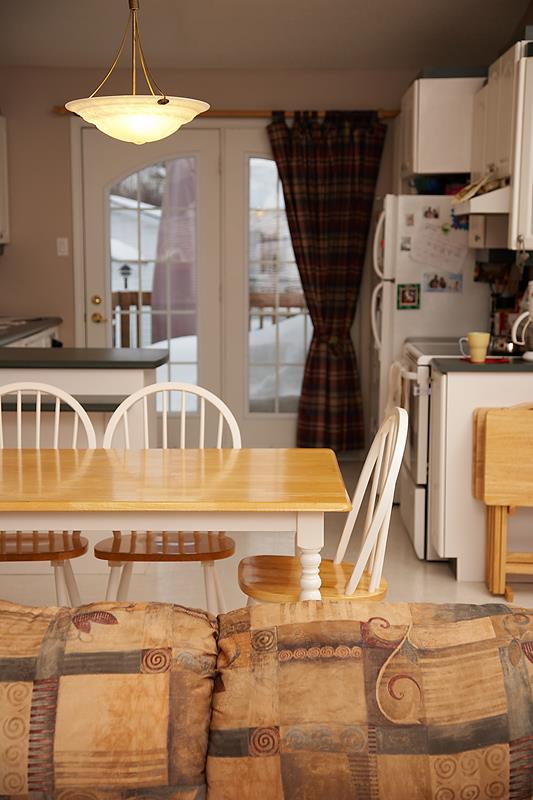
A bright home always shows far better than a dungeon. Removing heavy drapes and curtains can help as well, especially if they are out of date.
It is far better to have nothing than to have a pattern that was popular in the 80's.


Change Old Lighting

Change old lights selling Massachusetts homeLighting is one of those things that are subtle but believe me a buyer will notice if the lighting is really dated.
There are some great lights that can be purchased rather cheaply in many lighting stores especially if they are looking to restock their shelves with the latest model.
Even little things like upgrading to brighter bulbs can help. Most home buyers are turned off by dark unlit rooms.
Although a little more expensive to add, recessed lighting can really change the level of lighting in a room. Recessed light work really well in kitchen and baths.


Declutter Your Home

Declutter a Massachusetts homeThis one can really go a long way. Buyers like spacious rooms that they can envision their own belongings in. Getting rid of things that you know you will not be taking with you can really change the appearance of your home.
Hold a yard sale for those items that still hold value. Have other things you know you want to take with you but know they spoil how well your home shows? Get a PODs (portable storage on site) or even consider putting your stuff in a short term storage facility.
Not every improvement has to be expensive. Sometimes it is the small things you do that make the biggest difference in a buyers mind.

If you are thinking about selling your home or wonder how much your home is worth, contact me. If you have friend and family member that is interested in buying or selling thier home, please keep me in mind!                 cell: 302-290-1375 office 302-631-1648 e-mail pam.covey@foxroach.com

Wednesday, February 19, 2014

Prepare Your Home For Sale


Prepare Your Home For Sale


Whenever you are selling a home, accomplishing the goal of making your home stand out from the rest of the inventory for sale is a very important consideration.
Most Real Estate markets around the country are down and the competition is fierce for a buyer pool that has shrunk dramatically. Presenting your home in the best light will give you a leg up on the competition.
"Curb appeal" is often a catch phrase that is tossed around in Real Estate circles. 1st impressions are critical! Most buyers will find your home online and if your Realtor has done a good job with photography your home should look pretty decent.
Don't disappoint them by leaving your yard look like hurricane just took place!

 Here are a few quick pointers for your homes exterior to help create a more timely sale:                                                                                            Preparing a home for the Real Estate market in Massachusetts
  • Clean up all debris from this past winter including any tree limbs, branches, and left over leaves.
  • Clean the driveway and walkway of any sand and other debris.
  • Pay careful attention to have all your landscaping beds raked and weeded out.
  • Trim your bushes if needed. Pay attention to keeping them a few feet back from the home allowing for proper ventilation.
  • Consider planting some hearty Spring flowers that have lots of color.
  • Assess your driveway and get it seal coated if it looks old and worn. Seal coating really does wonders to  give your home a new and appealing feel.
  • Clean out your gutters. You do not want your gutters looking that could harbor creatures from the black lagoon.
  • Hose down your deck and consider seal coating the surface if needed.
  • The entry way to your home should sparkle! A fresh coat of paint on the front door always looks great. Make sure you remove any old cob webs.
     
  • Consider a few potted plants at the entry with some nice flowers.
  • Use a garden hose and spray down any areas of your siding that may have mold or mildew build-up.
 Just as important is how your home looks on the inside. The properties that are punished the
most in a challenging market are the ones where the buyers have to think about investing their time and money dealing with a previous sellers issues.
Trust me when I tell you that when you and I estimate the cost to repair an item is $500, the buyer is estimating $1000 in their mind. You will not win this battle.
Here are some easy things to consider for your homes interior:
                                                                                                                                                     Moving in Metrowest Massachusetts
  • The 1st thing you should consider is taking any unnecessary possessions and remove them from your home. You want to make your home feel as large and airy as possible. De-cluttering old furniture, boxes, and nick knacks go a long way in making a home presentable. I would consider a local storage center in your area for these things, as it is well worth the investment.
  • If you can not find out local storage facility I would consider renting a storage unit from PODS(portable on demand storage).
  • Next on the list should be a major Spring Cleaning. The bathrooms and kitchen should be spotless! These are the rooms that buyers will pay the most attention to. No big mystery, as these rooms are the most costly to upgrade.
  • Clean out all your closets. Buyers are always looking for closet space. Having your closets neatly organized is important.
  • Wash down all your windows. Homes always show better when there is plenty of natural light. Don't let years of grime and dust get in the way.
  • Consider touch up painting any high traffic areas where scuff marks and worn paint are easily visible.
  • Always paint or bleach any old stains away. For example if one of your kids took a shower without the curtain fully closed and there is a large stain in the kitchen ceiling below get it fixed. For one it looks awful and two buyers are going to assume you have a plumbing issue.
  • Clean out and organize your garage. A spacious garage will be a consideration for many home buyers.
  • In areas of the home where natural light is not the best make sure you have lamps with higher watt bulbs.
  • Clear your kitchen counters completely of everything but the bare bones essentials.
  • Clean all faucets,mirrors,lights, and ceiling fans.
  • Re-caulk any tubs, showers, sinks, or tile work that has loose grout.
  •    
  • Picking a top producing Realtor Metrowest Massachusetts
Above all else you want to take your emotions out of all the decision making when it comes to getting your home "staged".
Work with your Realtor and make it a team effort. Remember the goal is to get your home SOLD!
You may be taking pride in your PURPLE bathroom but the next buyer most likely will not.
While you have lived in your home for years and enjoy the way it looks a buyer has not.
If your Realtor does not have much experience is setting the stage for your home consult a professional stager.


Here is an excellent video that illustrates many of the points I have mentioned in this article.


Getting your home to look like something out of Better Homes and Gardens is certainly going to go a long way in getting to the closing table.

Don't forget though that all this effort will be for naught if you do not price your home properly and pick a top producing Realtor to work with. In a challenging market these are the two most important decisions you will be faced with.

If you are thinking about selling your home or wonder how much your home is worth, contact me. If you have friend and family member that is interested in buying or selling thier home, please keep me in mind!                 cell: 302-290-1375 office 302-631-1648 e-mail pam.covey@foxroach.com

Sunday, January 12, 2014

Top 5 Reasons to Invest in Real Estate Instead of Paper Assets


1) CONTROL - Many money managers will advise you to diversify your investments in paper assets such as mutual funds and cd's. Yet as investors search for investments with lower risk, they increase the level of risk for themselves by investing mainly in mutual funds. The problem being you have no real control over the assets value since you cannot renovate or improve its value like you would real estate. You cannot control the risk of the asset like you could with real estate by using creative legal structuring, having proper insurance, or protecting yourself against economic cycles through positive cash flow. Due to the lack of control of the asset, mutual funds are some of the worst investments available. On the other hand, real estate can be controlled much easier by investing correctly in assets that are under market value with multiple exit strategies that help increase the return on the investment while decreasing the risk. An increase return on an investment does NOT have to mean an increase in risk.
(2) INFLATION - Paper assets do not have inflation protection. With all of the "funny money" the U.S. government has printed in the past couple of years our economy is in shambles. Just look at the price we pay for commodities and gasoline, inflation is already happening. People’s paper assets primarily stay the same while everything else goes up in value, so most investors are losing money and being left behind by not investing in assets that keep up with inflation. Real estate value generaly goes up even though the demand for it stays the same thus keeping up with inflation, regardless of how much the dollar weakens. By investing in real estate you diversify into another asset class instead of the U.S. dollar which since 1971 is considered one of the worst investments of our time.
(3) DEPRECIATION - Paper asset income does not come with tax benefits like real estate even though taxes are one of our biggest expenses in life. Learning ways to reduce taxes is extremely important, especially in our current economic time. Reducing the taxes you pay to financial predators such as the U.S. government will help you get ahead financially. It's their job to find additional ways to tax you and it’s your job to find ways to reduce or even eliminate those taxes. When investing in real estate you get depreciation benefits which topically equal 60%-80% of your purchasing price divided by 27.5 years. For example, if you purchase a property for $100,000, then $80,000 (depending on the land value) is written off over 27.5 years, which means you get a $2,909 tax deduction on any income that property produces. So if you make $8,000 per year in rental income you are only paying taxes on approximately $5,000 instead of the original $8,000, which is huge when compared to other investments.
(4) LEVERAGE - Rarely can you use leverage with paper assets to borrow money against them and increase your return on investment. When using leverage, assuming it done correctly, you can increase your returns. With paper assets using leverage is extremely risky since there is no control. That's why financial planner and advisors will tell you leverage is risky. However, it's only risky on assets you have no control over or when you over leverage without looking at the cash flow closely after debt service. If you purchase the same $100,000 property (in point 3 above) but get an $80,000 loan at 5.5% for 30 years and put 20% down you now have a monthly payment of $454 per month leaving you with $213 per month in positive passive cash flow ($8,000 / 12 months = $667 - $454 payment = $213).  That means on your $20,000 you are making $2,556 per year or a 12.7% return on investment instead of an 8% return on investment on your $100,000.  Using leverage correctly is a great way to increase returns which is extremely necessary in an inflationary economy.
(5) CASH FLOW - Most paper assets do not produce positive monthly cash flow.  Cash flow is everything.  When you invest in most paper assets you typically invest for capital gains, not cash flow.  Capital gain investment income has higher taxes and do not provide you income when the economy is doing poorly.  You can easily lose your investment or a large percentage of it, like we saw when most American's retirement and 401k accounts lost 40%.  If you invest in cash flow, the value of the property does not matter.  You are seeing your return on investment on the cash flow and no matter what is happening in the economy you are not in danger of losing the asset or your initial investment.  You will typically see your cash flow come rain or shine even with fluctuations in the general overall economy. However, you are much less susceptible to economic fluctuations if you are prepared. By building your cash flow stream over multiple asset classes you will be in a much better financial position where your monthly expenses will be covered by the cash flow. As your expenses rise with inflation so does your cash flow due to rental inflation as well.
Credit to bigpocket.com

If you are thinking about selling your home or wonder how much your home is worth, contact me. If you have friend and family member that is interested in buying or selling thier home, please keep me in mind!                 cell: 302-290-1375 office 302-631-1648 e-mail pam.covey@foxroach.com

Saturday, January 11, 2014

5 Ways to Start with No Money and No Credit?

no money real estateOne of the Myth’s of real estate is that you have to have money.  This is flat out not true, you can absolutely do deals with no money and credit.  There are a few precautions I want to mention, especially for beginners before explaining how to do deals with no money and no credit.
Having money and credit can certainly make it easier to do deals.  It is crucial however to make sure the deal still meets your criteria.  At no point in time should you bend your criteria and make the deal work by putting in your own money.  For instance, if you are considering putting in 10% of your own money to make it meet your 70% LTV criteria, you should lower your offer or pass on the deal.  The risk has to be warranted, in fact, all deals should be good enough where you do not have to use any of your own money.  Using your own money should just sweatin the deal and improve the return without unneeded risks. 

Here are some ways you can do real estate deals with No Money and No Credit

  1. Use Private Money – Cash is king and having private money backing can allow you to do deals without any of your own money
  2. Partner – If you have a strong business plan with solid exit strategies and a successful track record there is a ton of money out there to fund 100% of your deals.  Make it a win-win for your partners and make it happen.
  3. Find deals with incredible numbers – If you are an expert at finding incredible deals, doing and exiting the deals then people will fight over funding your deals.
  4. Wholesale, Bird Dog – There is no risk, money or credit needed in getting a deal under contract or locating deals for investors.
  5. Subject To, Seller Financing, Lease Options – Taking title to a property subject to the seller’s existing mortgage, getting the seller to carry financing or lease optioning a property are ways to do no money no credit deals
If you are thinking about selling your home or wonder how much your home is worth, contact me. If you have friend and family member that is interested in buying or selling thier home, please keep me in mind!                 cell: 302-290-1375 office 302-631-1648 e-mail pam.covey@foxroach.com

Credit to bigpocket.com